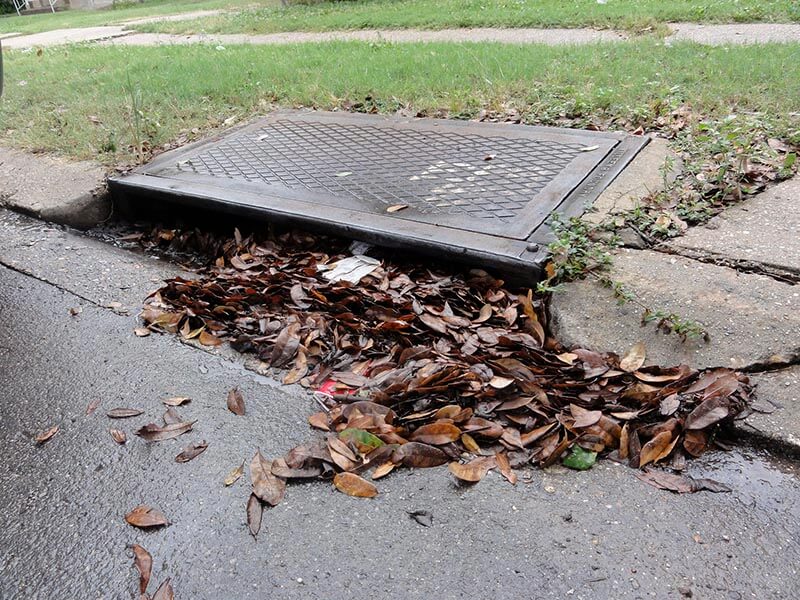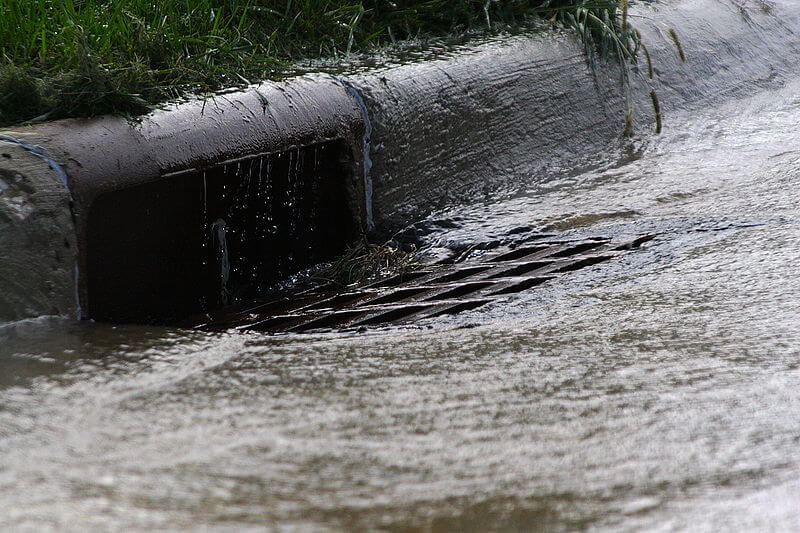
A driveway catch basin or residential garage trench drain can be easy to ignore until water starts pooling beside the garage door, road salt forms a gritty layer over the grate, or a summer storm sends water toward the foundation. Across Toronto and the Greater Toronto Area, our crews commonly find a mix of leaves, sand, silt, gravel and winter road residue inside residential drainage systems.
This guide explains what homeowners can safely maintain, what requires professional equipment, and why you should confirm where a drain leads before putting anything into it. If water is already slow or backing up, review the signs of a clogged catch basin or arrange professional catch basin cleaning.
Driveway Catch Basin or Garage Trench Drain: What Is the Difference?
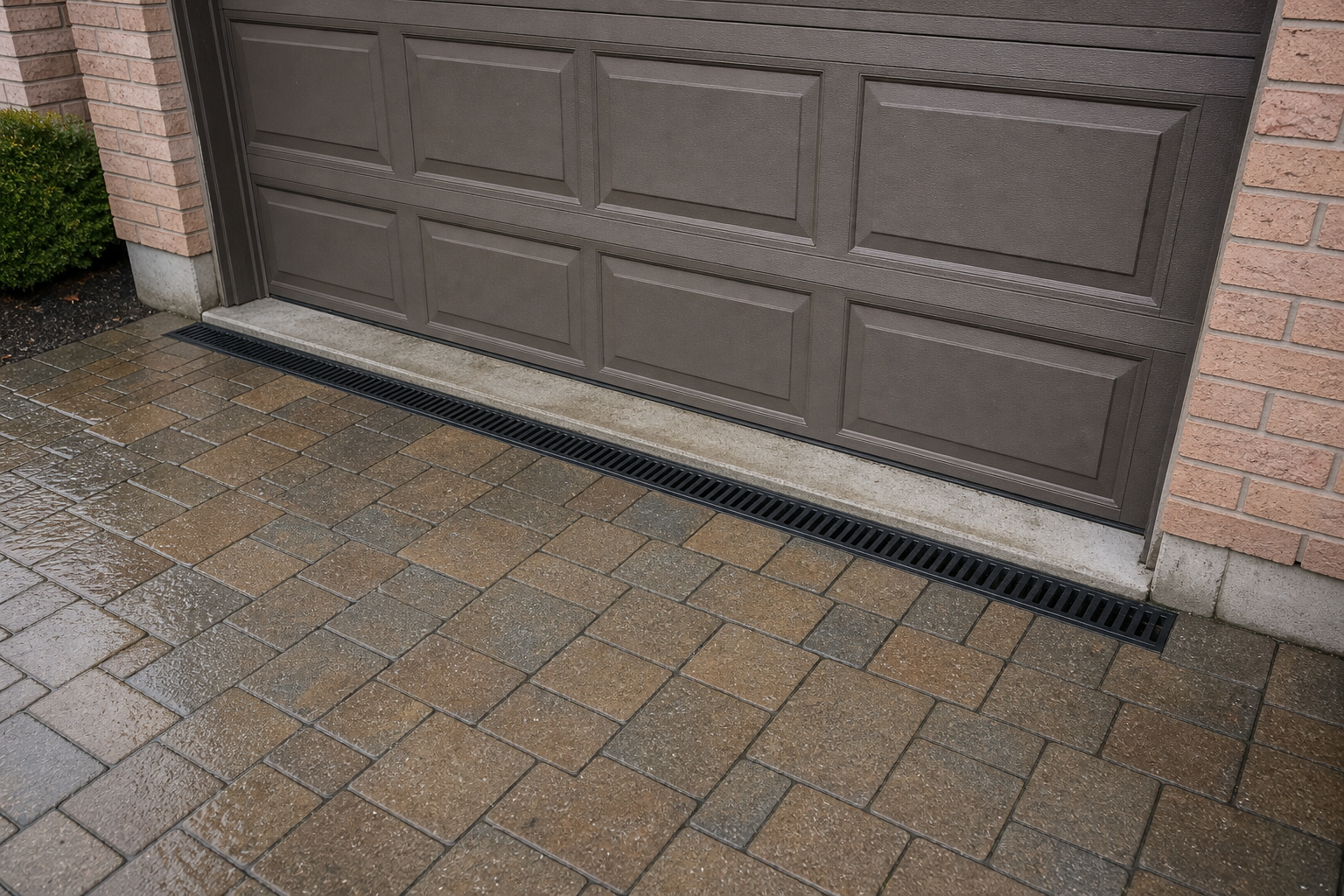
A driveway catch basin is usually a grated chamber designed to collect surface runoff while allowing heavier sediment to settle below the outlet pipe. Where a residential driveway slopes down toward the house, a narrow linear trench or channel drain is commonly installed immediately outside and parallel to the garage door. Its purpose is to intercept runoff before it crosses the garage threshold. Individual homes can differ, but large square catch basins inside the garage are generally associated with commercial or industrial properties rather than ordinary residential garages.
Do not assume a garage trench drain connects to the sanitary sewer or that every exterior drain connects directly to a storm sewer. The arrangement can vary with the municipality, property age and previous renovations. When the outlet is unknown, a drainage professional can inspect or trace the line before cleaning or flushing it.
Why Residential Drains Clog in the GTA
- Autumn leaves and organic debris: Wet leaves mat together over grates and break down inside the basin.
- Sand and interlock joint material: Fine particles wash off paver driveways and settle below the outlet.
- Winter road salt and grit: Vehicles carry slush, salt and sand into garages throughout an Ontario winter.
- Soil and landscaping debris: Mulch, soil and grass clippings move toward low drainage points during rain.
- Oil or automotive leaks: Fluids can contaminate sediment and must be contained and handled appropriately.
- Blocked connecting pipes: Sediment, roots, damaged pipe or a downstream restriction can cause recurring backups even after the grate is cleared.
Warning Signs Your Driveway or Garage Drain Needs Cleaning
- Water remains around the grate after nearby pavement has dried.
- Drainage is noticeably slower during ordinary rainfall or snowmelt.
- Leaves, sand or gravel repeatedly collect over the same drain.
- Water backs up when another connected drainage point is used.
- The garage develops a persistent damp or stagnant odour.
- Pavers settle, asphalt cracks or erosion appears around the basin.
- The drain freezes repeatedly because standing water is not clearing.
Recurring ponding is especially important on the driveway apron outside a garage or near a foundation wall. The drain may be undersized, the surrounding grade may be directing too much water toward it, or the outlet pipe may be partially obstructed. Cleaning restores capacity when debris is the cause, but it cannot correct every grading or pipe-defect problem.
Safe Maintenance Homeowners Can Do
Homeowners can reduce clogs by sweeping the driveway and garage, removing loose leaves from an accessible grate, and checking drainage after heavy rain. Wear gloves, keep children and pets away from the work area, and never lift a heavy or secured grate unless you can do so safely. Do not reach into an open basin.
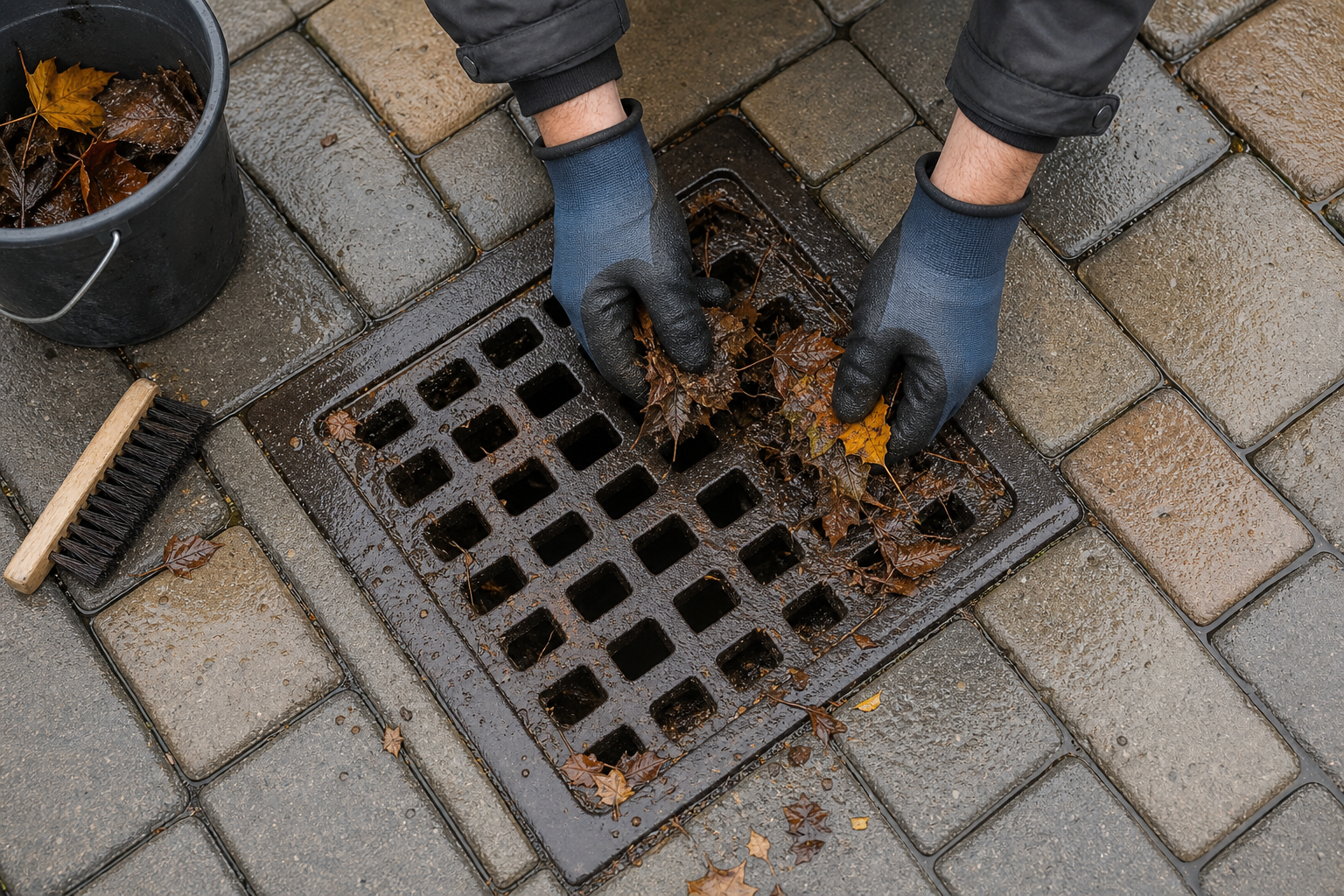
For Toronto properties, the City advises sweeping outdoor surfaces instead of washing debris toward catch basins. Its outdoor washing guidance says wash water, soaps, automotive fluids and solid materials must not be allowed to enter an outdoor catch basin. Other GTA municipalities have their own sewer-use rules, so check the requirements where your property is located.
What Not to Put Down a Driveway or Garage Drain
- Motor oil, fuel, brake fluid, antifreeze or windshield washer fluid
- Paint, solvents, degreasers or chemical drain cleaners
- Soap, detergent, mop water or pressure-washing wastewater
- Concrete slurry, soil, sand or swept debris
- Unknown liquids from a spill or leaking container
Toronto's Sewers By-law guidance explains that outdoor catch basins can connect to storm sewers that discharge to rivers, streams and Lake Ontario. The City's household hazardous waste program lists motor oil, antifreeze, fuel, brake fluid, solvents and drain cleaners as materials requiring proper disposal rather than pouring them into a drain. If a spill may reach a catch basin in Toronto, contact 311; elsewhere in the GTA, contact the local municipality.
How Professional Residential Catch Basin Cleaning Works
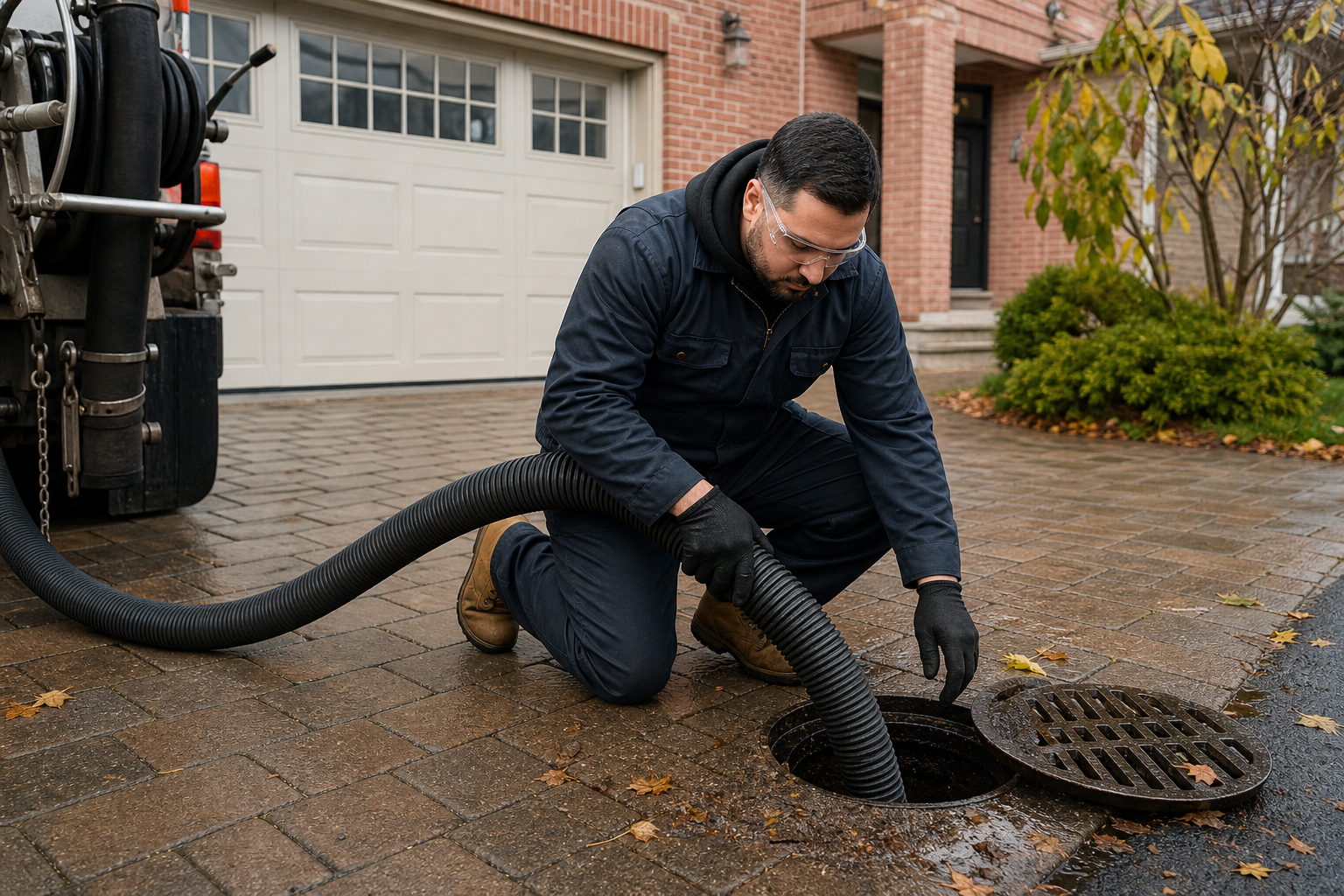
A professional visit begins with identifying the drain type, checking the grate and surrounding pavement, and looking for signs of sediment depth, standing water or outlet restriction. The crew can then use vacuum equipment to remove water, leaves and settled solids from the chamber. When the connecting line is slow, targeted flushing or further inspection may be recommended.
- Site assessment: Confirm access, drainage layout and visible risks.
- Vacuum removal: Extract accumulated water, sludge, grit and organic debris.
- Outlet check: Test whether water can leave the basin normally.
- Pipe cleaning when needed: Flush an obstructed line using suitable equipment and controlled water.
- Final flow test: Verify drainage and identify issues that cleaning alone cannot resolve.
- Responsible handling: Keep removed sediment and contaminated water out of the storm system.
If the restriction extends beyond the basin, our storm drain cleaning and pipe flushing service may be appropriate. A camera inspection or repair referral may be needed when a line repeatedly clogs, has root intrusion, or appears damaged.
How Often Should a Residential Catch Basin Be Cleaned?
There is no responsible one-size-fits-all schedule. Inspect the grate seasonally and after major storms, then base professional cleaning on sediment accumulation, drainage speed and site conditions. Homes beneath mature trees, interlock driveways that shed sand, steep lots, and garages exposed to heavy winter slush may need attention more often than sheltered properties with little debris.
A practical time to inspect is after spring snowmelt and again after most leaves have fallen. Keep notes or photos of how quickly water clears; a gradual change is easier to recognize when you have a baseline. Our broader storm drain maintenance guide covers additional seasonal checks.
Residential Service Across Toronto and the GTA
MT Catch Basin provides residential driveway and garage drainage cleaning in Toronto, Vaughan, Richmond Hill, Markham, Mississauga, North York, Scarborough, Etobicoke and Oakville, with service also available in Aurora, Newmarket, Milton, Pickering, Ajax and East York. Local drainage layouts and sewer-use requirements vary, so recommendations are based on the drain found at your property—not assumptions from the grate alone.
Frequently Asked Questions
Can I use chemical drain cleaner in a garage trench drain?
No chemical should be used until the drain type and connection are known. Chemical drain cleaners may be hazardous, may not remove sand or sediment, and must not be released into a storm connection. Use physical surface cleaning and arrange an inspection for a blocked line.
Will pressure washing clear a driveway catch basin?
Pressure washing can move contamination and sediment deeper into the system without removing it. It can also create wastewater that is not permitted to enter an outdoor catch basin. Vacuum extraction is the usual method for removing settled material from the chamber.
Why does my garage drain smell?
Possible causes include stagnant water, decomposing debris, a dry trap, contaminated sediment or an unexpected sewer connection. Because the correct remedy depends on the system, persistent sewage-like or chemical odours should be professionally investigated.
Can cleaning fix every driveway drainage problem?
Cleaning can restore flow when debris or sediment is restricting the basin or pipe. It will not repair collapsed piping, poor grading, an undersized system or a downstream municipal issue. Those conditions require further diagnosis.
Need a residential driveway catch basin or garage trench drain assessed? Contact MT Catch Basin for a clear inspection and cleaning recommendation anywhere in Toronto and the GTA.
Call (647) 372-5326 Get Free Quote